Apartment No. 50
Apartment No. 50, located in a large, U-shaped six-storey building on Sadovaya Street, is one of the most significant locations in The Master and Margarita. It is not merely a setting but an active participant in the novel's supernatural and satirical events, a place where the boundary between the mundane and the diabolical dissolves. Its history of inexplicable disappearances and its eventual occupation by Woland and his retinue mark it as a site of judgment and transformation, a microcosm of the moral and spiritual corruption that the novel exposes.
History and Strange Reputation
Long before Woland's arrival, Apartment No. 50 had a notorious history. Two years prior, it belonged to the widow of a jeweller, Anna Frantsevna de Fougeray, who let out three of its five rooms. Inexplicable events began: people started to disappear without a trace. A lodger left with a policeman and never returned; the policeman vanished as well. Another lodger, Belomut, was taken to work by car and simply ceased to exist. Anna Frantsevna herself, after suffering from insomnia, fled to her dacha and never came back. Her pious housekeeper, Anfisa, also vanished overnight. The apartment stood empty and sealed for only a week before the late Berlioz and Styopa Likhodeev moved in with their wives. Within a month, both wives had also disappeared, one reportedly seen in Kharkov with a ballet-master, the other installed in a room on Bozhedomka Street on the condition she never return to Sadovaya. This history of mysterious vanishings establishes the apartment as a place of inherent instability and danger, a space where the normal rules of reality do not apply.
Woland's Occupation and the Eviction of Likhodeev
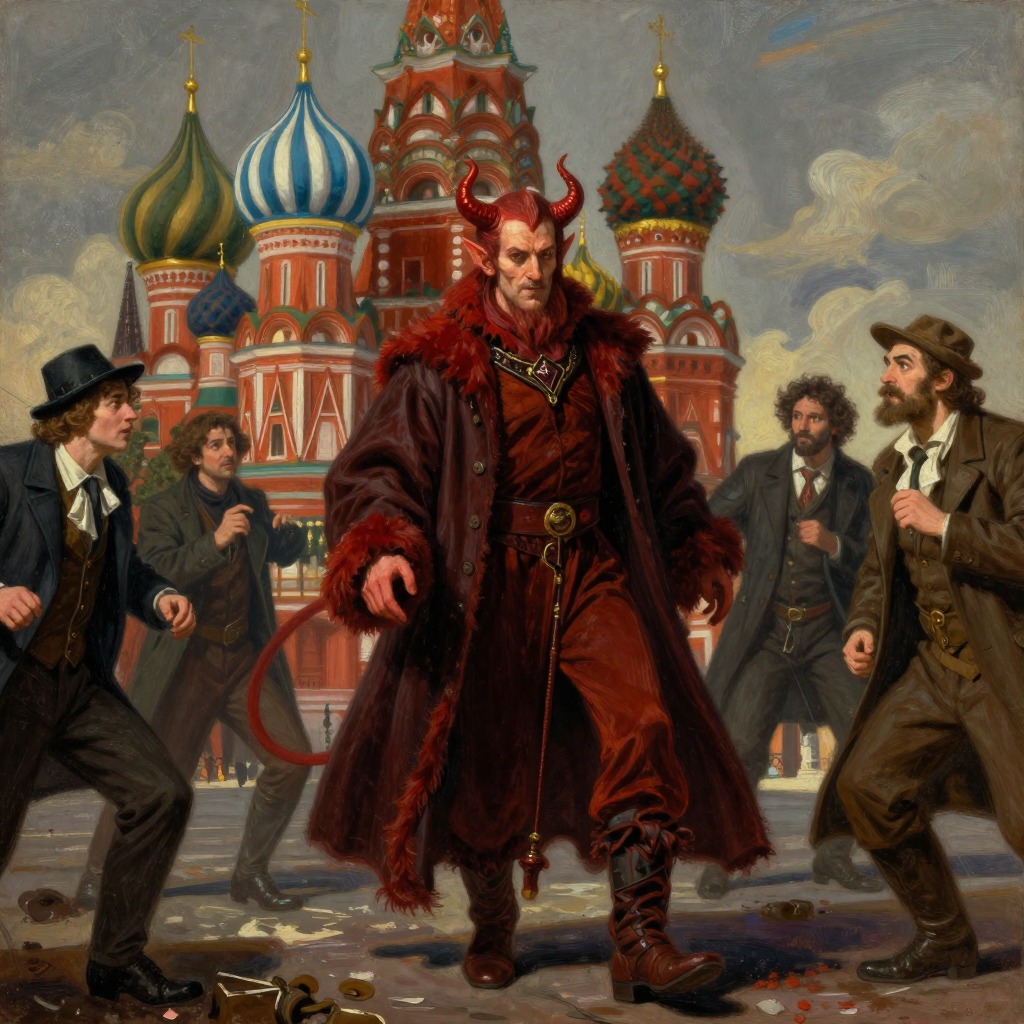
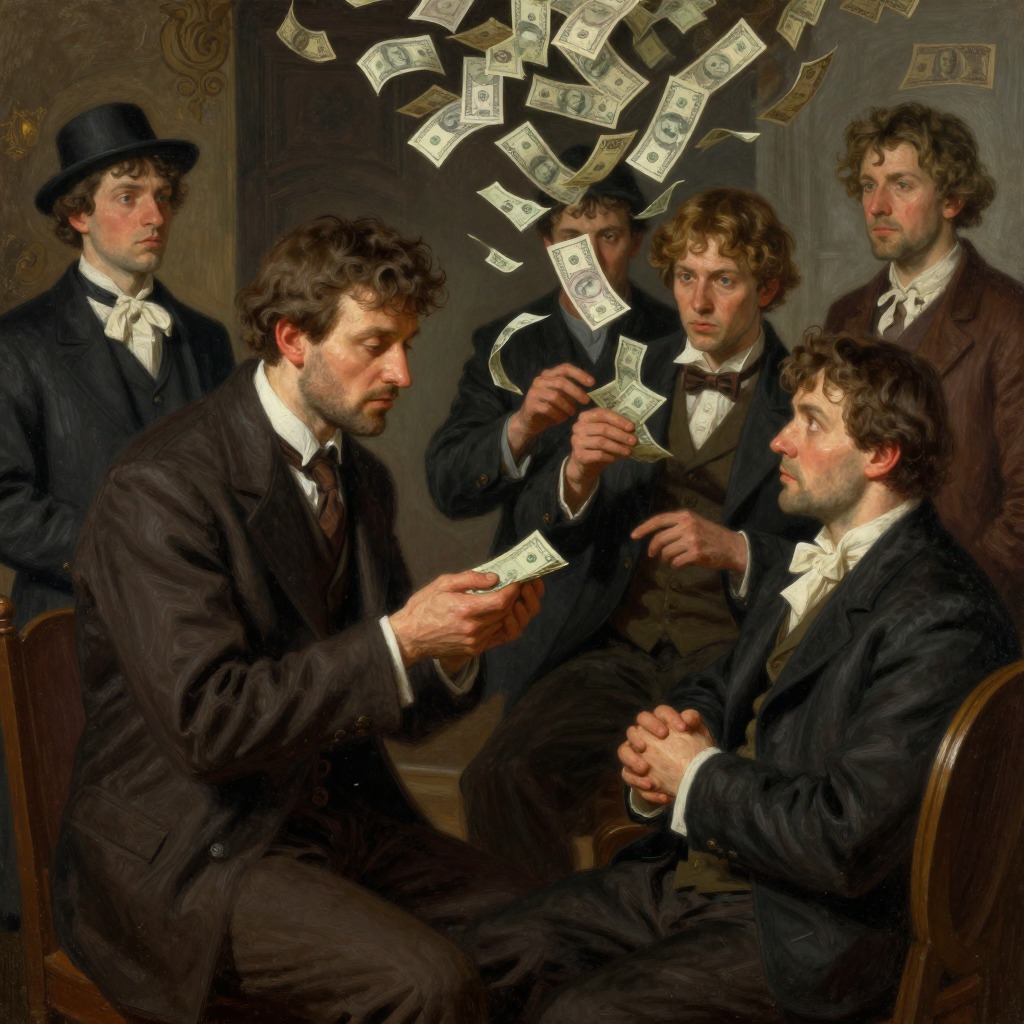
The apartment's true purpose is revealed when Woland and his retinue take possession. After Berlioz's death and the sealing of his study, the chairman of the tenants' association, Nikanor Ivanovich Bosoy, discovers Koroviev in the deceased's study. Koroviev, acting as Woland's interpreter, produces a forged letter from Likhodeev requesting the foreigner's temporary residence. He bribes Nikanor Ivanovich with a wad of roubles that later transforms into dollars, leading to the chairman's arrest. The apartment is then fully occupied by Woland, Koroviev, the cat Behemoth, and Azazello. The original tenant, Styopa Likhodeev, is unceremoniously evicted. After a severe hangover, he finds Woland in his bedroom, along with the rest of the retinue. They accuse him of drunkenness, idleness, and abusing his position. With a command from Woland, Azazello chucks him out of Moscow, and Styopa wakes up on a jetty in Yalta, his memory of the contract with Woland completely gone. The apartment thus becomes a space where the corrupt and incompetent are summarily judged and removed.
A Stage for Supernatural Events and Moral Judgment
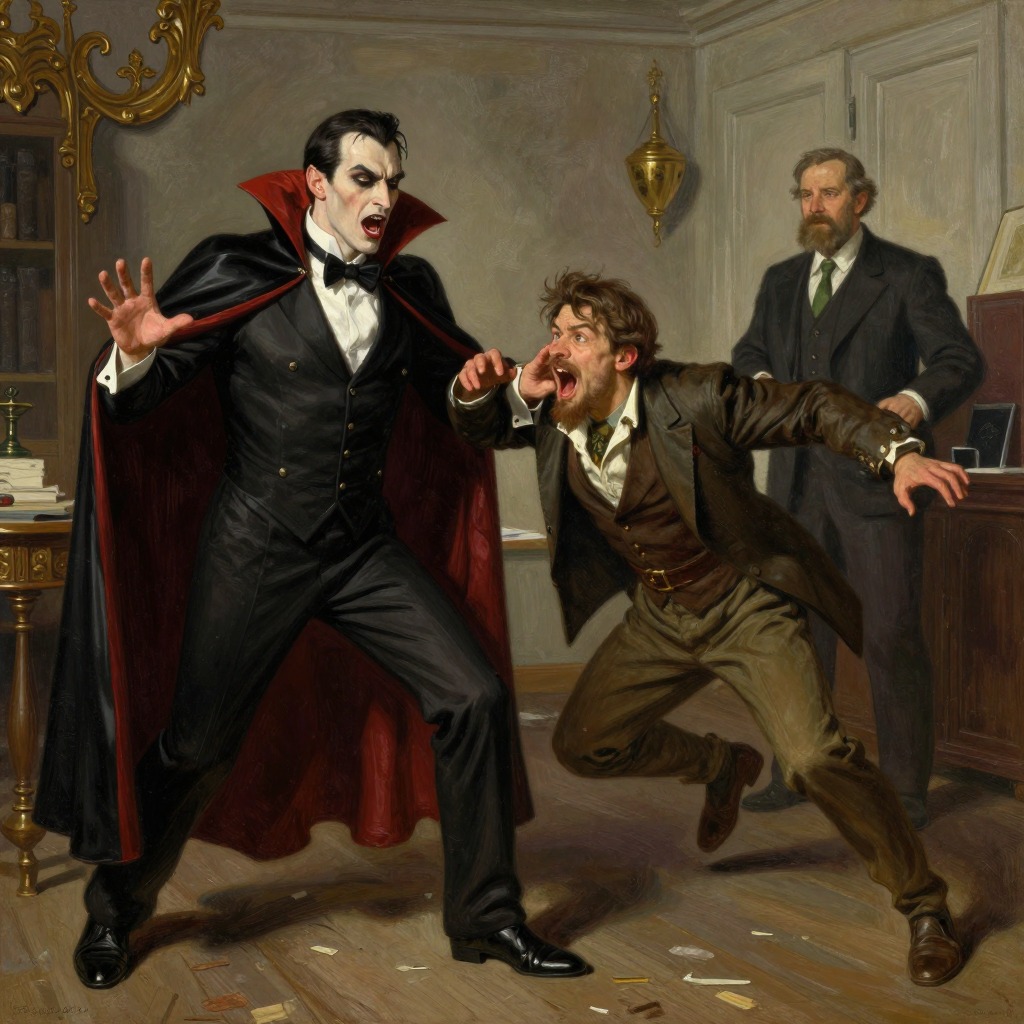
Apartment No. 50 becomes the epicenter of the novel's most fantastical events. It is from here that Woland and his retinue operate, orchestrating the black magic seance at the Variety Theatre and the subsequent chaos in Moscow. The apartment itself is a place of constant, unsettling activity. The administrator Varenukha, after being attacked by Azazello and a vampire, is dragged to the apartment, where a naked, red-haired girl with phosphorescent eyes and ice-cold hands kisses him, turning him into a vampire. The apartment is also the site of the mysterious telephone call that warns Rimsky not to call anywhere. It is a space where the boundaries between the living and the dead, the real and the supernatural, are completely permeable. The apartment's function is not merely to house the devils but to serve as a stage for their exposure of human folly and corruption, a place where the hidden truths of Soviet society are brought to light through demonic intervention.
Narrative and Thematic Significance
Apartment No. 50 is a crucial narrative device that links the novel's disparate plotlines. It is the home of Berlioz, whose death sets the Moscow plot in motion; the residence of Likhodeev, whose disappearance creates a crisis at the Variety Theatre; and the headquarters of Woland, from which he directs his campaign of exposure. Thematically, the apartment represents the failure of the Soviet system to provide a stable, moral order. Its history of disappearances and corruption mirrors the larger societal decay. The fact that it is taken over by Satan and his retinue is a powerful satirical statement: the forces of evil are more effective at administering justice and exposing hypocrisy than the official institutions of the state. The apartment is not a home but a site of judgment, a place where the true nature of its inhabitants and visitors is revealed, and where the novel's central themes of cowardice, truth, and the power of the supernatural are played out.